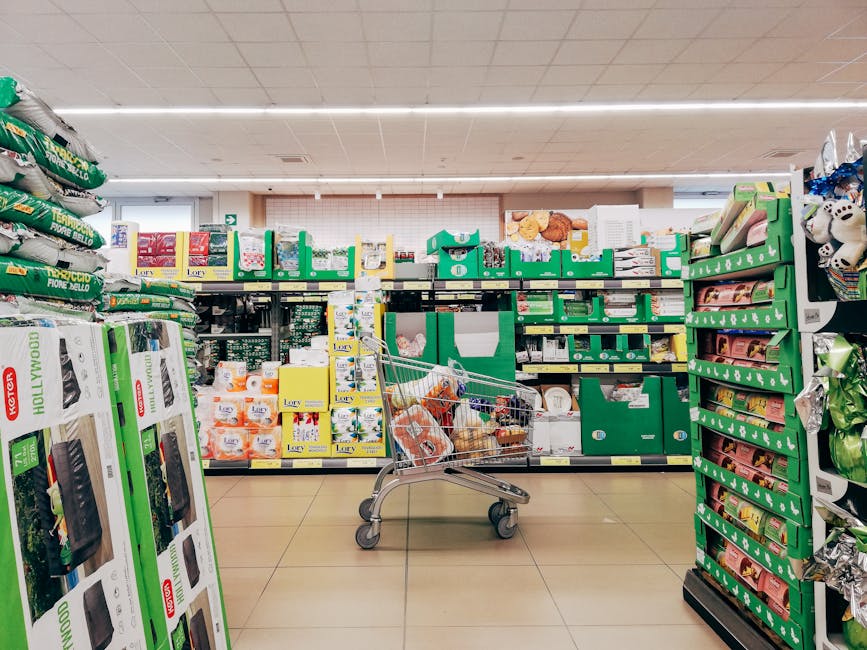
Food is one of the largest unavoidable costs for UK households, and it has been climbing again. Recent industry data put the average UK household grocery spend at around £119 a week — comfortably over £6,000 a year — with families of four often spending £160–£170 a week. Grocery price inflation, which peaked at a punishing 19.1% in March 2023, eased through 2025 but has crept back up in 2026, sitting in the mid-single digits and with some forecasters warning it could climb toward 9% by year end. In short: the squeeze is real, but a household that combines a few disciplined tactics can realistically trim 20–30% off the bill without eating worse.
This guide covers the most effective, evidence-based ways to cut your grocery bill in 2026 — from switching supermarket to working loyalty schemes, yellow-sticker bargains, cashback apps and slashing food waste. Figures here are illustrative and change with the market; always check current prices for yourself.
Switch to a Discount Supermarket (or Split Your Shop)
Aldi and Lidl consistently top independent price studies. In Which? and other monthly basket comparisons through early 2026, Aldi has repeatedly been crowned cheapest for a standard basket of essentials, with Lidl typically within a pound or two. On a roughly 95-item basket, Aldi has come in around £171 against Lidl’s £172 in recent months — and both regularly land 15–35% below the big four (Tesco, Sainsbury’s, Asda, Morrisons) on comparable own-label items.
Switching a weekly shop entirely to Aldi or Lidl can save a typical household roughly £1,000 or more a year. But the discounters don’t carry every branded line, so many households split the shop: do the bulk of staples at Aldi or Lidl, then top up specific brands or specialist items at a big-four store. On larger, brand-heavy baskets the picture flips — Asda and Tesco with a Clubcard have traded the “cheapest big shop” title through 2026 — so the right answer depends on what’s in your trolley.
Use Loyalty Schemes and Personalised Offers
Supermarket loyalty schemes have become genuinely valuable rather than a token gesture. Tesco Clubcard and Sainsbury’s Nectar both run member-only pricing — “Clubcard Prices” and “Nectar Prices” — that can knock 10–25% off everyday lines. In 2026 Tesco’s Clubcard pricing has turned aggressive on high-volume staples like pasta and tinned tomatoes, narrowing the gap to the discounters. Lidl Plus and the Co-op’s membership scheme offer similar member-only deals and personalised coupons.
The rule is simple: always scan your card. On a single member-priced item the difference can be substantial, and on a big shop the Clubcard saving alone has run to roughly £40–£50 in published basket comparisons. Points also accumulate for future shops or partner redemptions.
Plan Your Meals and Shop with a List
Impulse buying is the single biggest driver of overspending. A weekly meal plan paired with a strict list can cut a bill by 15–20% on its own by eliminating unplanned purchases and the food waste that follows them.
- Plan 5–7 meals before you shop, building them around what’s on offer
- Write your list organised by store section so you don’t double back (doubling back triggers impulse buys)
- Check the fridge, freezer and cupboards first — “shop your kitchen” before the shop
- Never shop hungry, and where possible shop once a week rather than topping up daily
Buy Own-Brand and Trade Down a Tier
Supermarket own-brand products are typically 20–40% cheaper than branded equivalents and are often made in the same factories. In blind taste tests, shoppers routinely struggle to tell own-label from branded across cereals, pasta, tinned goods, dairy and cleaning products. The “downshift challenge” popularised by MoneySavingExpert is the same idea: drop one brand tier (premium to mid, mid to value) on a handful of lines and see if anyone notices — most don’t. Swap one or two categories at a time and extend from there.
Check the Unit Price, Not the Shelf Price
The headline price on the shelf can be misleading. By law, supermarkets display a unit price — the cost per 100g, per litre or per item — usually in small print on the shelf label. Comparing unit prices is the only reliable way to know whether the bigger pack, the multibuy or the “offer” is actually cheaper. It frequently isn’t: smaller packs are sometimes better value than family sizes, and a “3 for 2” can cost more per unit than buying singles. Train yourself to glance at the per-100g figure and you’ll catch dozens of these every month.
Hunt Yellow-Sticker and Reduced Items
Stores mark down short-dated stock — the famous “yellow stickers” — to clear it before close. Discounts often deepen as the day goes on, with the best reductions typically appearing late afternoon into the evening (exact timings vary by store and region, so it pays to learn your local shop’s rhythm). Reduced meat, fish, bread and ready meals freeze well, so a yellow-sticker haul can stock the freezer for weeks at a fraction of full price. Treat it as a bonus on top of your plan, not a reason to buy things you won’t use.
Use Cashback Apps and Vouchers
Several apps still run grocery cashback in 2026, all confirmed active this year:
- Shopmium: the most popular grocery cashback app in the UK — full or partial refunds on selected branded items; buy the product, snap the receipt, get paid
- CheckoutSmart: UK-operated since 2012, cashback on branded grocery products across major supermarkets; withdrawals usually clear within about 5–10 working days
- GreenJinn: offers across food, health and beauty, with loyalty-card linking at some supermarkets so you skip the receipt scan
- TopCashback / Quidco: occasional cashback on online grocery orders (Ocado, Sainsbury’s and others)
These take a few minutes to set up and can return roughly £10–£30 a month for an active user. Stack them with loyalty pricing where the terms allow.
Reduce Food Waste
UK households throw away roughly £1,000 of edible food a year on average, according to waste charity WRAP. Cutting that is effectively free money — you’ve already paid for it. Practical tactics:
- Freeze before it turns: bread, meat, cheese and many fruit and vegetables freeze well — do it the day before the use-by date if you won’t get to it
- Know your dates: “best before” is a quality guide and food is usually fine after it; “use by” is a safety date and must be respected
- First in, first out: move older items to the front when you unpack a new shop
- Too Good To Go: buy surplus food from local cafes and shops cheaply — a “magic bag” worth £8–£15 typically costs £2–£5
Buy in Bulk for Non-Perishables
Stocking up on non-perishables — pasta, rice, tinned goods, cleaning products, toilet roll — when they’re genuinely cheap (check the unit price) saves over time, as many have a 1–3 year shelf life. Costco (membership required) and B&M can offer further savings on bulk. The caveat: only bulk-buy what you’ll actually use, and only when the per-unit price beats your normal source.
Shop Online to Stick to Your Budget
Online shopping makes the running total visible, so it’s easier to remove items and avoid impulse buys — though you miss the in-store yellow-sticker bargains, so it’s a trade-off. Most supermarkets charge roughly £1.50–£5 for delivery or offer free click-and-collect. If you order regularly, a delivery subscription (such as Tesco Delivery Saver or Sainsbury’s Delivery Pass) can pay for itself from around £8 a month.
How to Decide Which Tactics to Use
We ranked the tactics below by impact versus effort, drawing on independent price studies (Which?, Kantar/Worldpanel and monthly basket comparisons), WRAP food-waste data and the published terms of each scheme. Start where the effort is lowest and the saving is highest, then layer on the rest:
- Do these first (low effort, high saving): scan a loyalty card every shop, switch staples to own-brand, and check unit prices
- Build the habit next (medium effort, high saving): meal-plan with a list, and switch or split your shop to Aldi/Lidl
- Top up the savings (ongoing): cashback apps, yellow-sticker hunting and a tight grip on food waste
No single move transforms the bill, but stacking several realistically saves an average family £100–£200 a month.
Saving by Tactic at a Glance
| Tactic | Typical Monthly Saving | Effort |
|---|---|---|
| Switch / split to Aldi or Lidl | £60–£120 | Low–Medium |
| Meal planning + shopping list | £30–£60 | Medium |
| Buy own-brand / downshift a tier | £20–£50 | Low |
| Reduce food waste | £20–£40 | Medium |
| Loyalty scheme pricing | £15–£40 | Very low |
| Yellow-sticker / reduced items | £10–£40 | Medium |
| Cashback apps | £10–£30 | Low |
Bottom Line
With food inflation back on the rise in 2026, the households that stay ahead are the ones that combine tactics rather than chasing one silver bullet. Start with the easiest wins — loyalty pricing, own-brand swaps and unit-price checks — then add meal planning, a discounter switch and cashback. Done consistently, £100–£200 a month off an average family bill is a realistic target.
Frequently asked questions
What is the average UK grocery bill in 2026?
Recent industry research puts the average UK household grocery spend at around £119 a week — more than £6,000 a year. A family of four often spends £160–£170 a week, while a single person typically spends £35–£80. Your figure depends on household size, diet and which supermarket you use.
Which supermarket is cheapest in 2026?
For a standard basket of essentials, Aldi has repeatedly been named cheapest in 2026 independent comparisons, with Lidl close behind — usually within a pound or two. On larger, brand-heavy shops the picture changes, with Asda and Tesco (with a Clubcard) trading the cheapest-big-shop title through the year. The best choice depends on what’s in your trolley.
Do cashback apps like Shopmium and CheckoutSmart still work?
Yes. Shopmium, CheckoutSmart and GreenJinn are all still operating in the UK in 2026 and remain the main grocery cashback apps. You buy a qualifying product, upload your receipt (or link a loyalty card where supported) and receive cashback, usually within a week or so of withdrawing. Active users can earn roughly £10–£30 a month.
How much can I realistically save on my food shop?
Most households can cut 20–30% off their grocery bill by combining several tactics — switching or splitting to a discounter, meal planning, own-brand swaps, loyalty pricing and cutting waste. For an average family that often works out at £100–£200 a month. Savings vary by your starting habits and where you shop.
Is own-brand food really as good as branded?
For most everyday categories — pasta, tinned goods, cereals, dairy and cleaning products — blind taste tests show shoppers struggle to tell own-label from branded, and they’re often made in the same factories. Own-brand is typically 20–40% cheaper. Try swapping one or two categories at a time and keep the branded version only where you genuinely notice a difference.

Last reviewed: June 2026.
This article is general information, not financial advice. Prices, schemes and inflation figures change — always check current details before making decisions.
Related Articles
- UK Food Prices Still Rising in 2026: 10 Smart Ways to Cut Your Grocery Bill
- UK Vaping Tax 2026: Everything You Need to Know About the New Vaping Products Duty — And How to Beat the Price Rises
- UK Supermarket Price Wars 2026: Which Is Really the Cheapest and How to Save £1,000 a Year
- How the Iran War Could Push UK Food Bills Up 8%: What Every Household Needs to Know