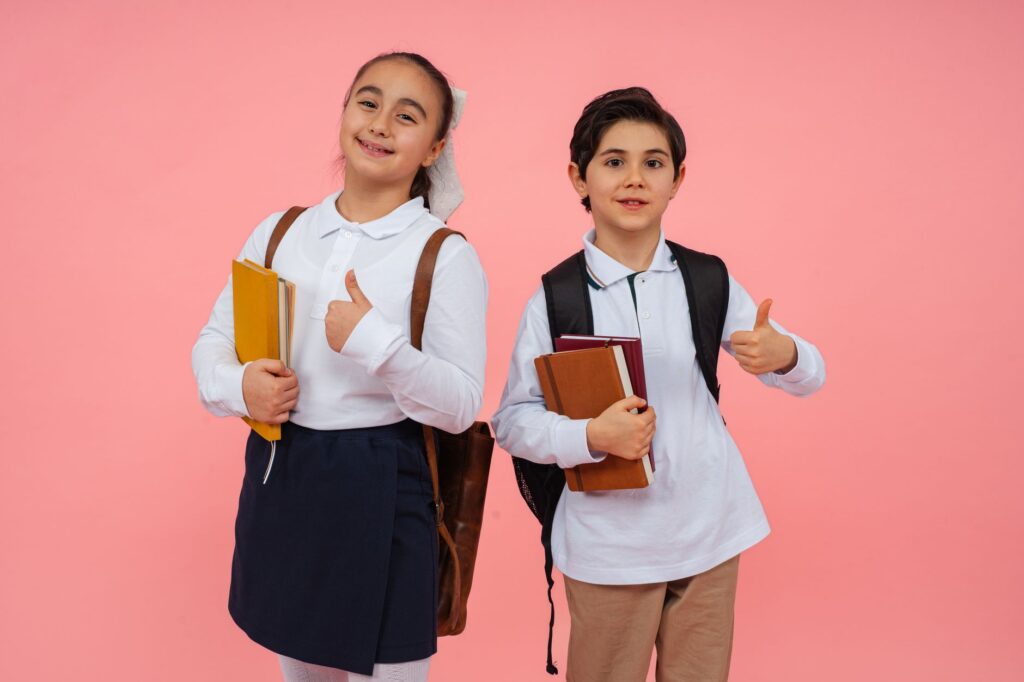
UK families are set to spend around £450 per child getting ready for the new school year in September 2026, according to recent back-to-school surveys — roughly £490 for a primary child once uniform, shoes, stationery and tech are added up, and a little over £420 for secondary. Uniform alone can reach £340–£440. The good news: with new rules capping branded items, a bit of second-hand shopping, generic supermarket kit and some careful timing, most parents can cut that bill by a third or more without their child looking any different at the gates.
Every July, the same quiet dread creeps into the family budget: outgrown shoes, shrunken jumpers, a PE kit that has mysteriously vanished, and a stationery list as long as your arm. Back-to-school is one of the biggest predictable spending spikes of the year, and it lands just after the summer holidays have already stretched things thin. This guide breaks down what the new school year really costs in 2026, explains the fresh rules that should bring uniform bills down, points you to the help that’s available, and gives you a dozen practical tactics to keep more money in your pocket.
What back to school actually costs in 2026
Recent UK back-to-school surveys put the average spend at roughly £450 per child, but the figure varies a lot by age. Parents of primary-age children report spending close to £490 per child once you factor in uniform, shoes, bags, stationery and technology, while secondary spending averages around £420 and sixth-form or college around £390. Government analysis has estimated the cost of a full uniform (including PE kit) at about £442 for secondary and £343 for primary — and those numbers explain why more than a third of parents say they struggle to afford what their school demands.
The pressure is sharpest for lower-income households: surveys suggest more than half of families on the lowest incomes struggle with uniform costs, compared with around a fifth of the highest earners. It is not a small line item — nationally, back-to-school shopping is estimated to cost UK parents well over £2 billion each year.
A realistic per-child budget breakdown
Here is a typical secondary-school shopping list with a “standard” price and a “budget” alternative for each item. The budget column assumes generic supermarket ranges, some second-hand uniform and shopping the sales — not cutting corners on quality where it matters (shoes).
| Item | Typical cost | Budget option |
|---|---|---|
| Uniform (jumpers, shirts/polos, trousers/skirts) | £150 | £60 |
| School shoes | £42 | £24 |
| PE kit | £45 | £20 |
| Bag / backpack | £25 | £9 |
| Stationery & equipment | £25 | £10 |
| Tech (calculator, headphones, device share) | £110 | £30 |
| Trips, lunches float & extras | £40 | £15 |
| Total | £437 | £168 |
The difference — around £269 per child — is real money you can redirect to the holidays, savings or simply the rest of the September bills. Multiply that across two or three children and the case for a plan becomes obvious.
The new uniform rules that should cut your bill
There is genuine relief on the way. Under the Children’s Wellbeing and Schools Act, which became law in April 2026, state schools in England must limit the number of compulsory branded uniform items from September 2026. Primary schools are capped at three branded items, and secondary schools at three plus a tie. Crucially, “branded” does not just mean a logo — it covers any item only available from a specific supplier because of its colour, fabric or design, and the definition now includes bags and PE kit.
The government estimates the combined package of reforms could put up to £1,000 a year back in families’ pockets. In practice it means most compulsory items — trousers, skirts, PE shorts, everyday polos — can now be bought as cheap generic versions from a supermarket rather than an expensive branded supplier. When you read your school’s uniform list this summer, check how many branded items it still insists on; if it exceeds the new cap, the school is obliged to bring it into line.
Help available if money is tight
Several support routes exist, and many families who qualify never claim them.
- School uniform grants: Some councils offer a uniform grant (often £20–£150 per child), though availability is patchy and many have scaled schemes back. Search “[your council] school uniform grant” to check.
- Free school meals (FSM): From the 2026–27 academic year, eligibility in England expands so that every child in a household receiving Universal Credit qualifies for a free meal — around half a million more children. Registering also often unlocks extra help such as the Pupil Premium and, in some areas, uniform vouchers.
- The Crisis and Resilience Fund: The Household Support Fund ran until 31 March 2026 and has been replaced from April 2026 by a new three-year Crisis and Resilience Fund, distributed through councils to help with essentials including school costs. Apply via your local authority.
- Uniform banks and swap shops: Charities, PTAs and community groups run pre-loved uniform exchanges — often free or a nominal donation. Ask the school office; many run one and simply don’t advertise it loudly.
- Free breakfast clubs: Thousands of free primary breakfast clubs are rolling out, saving both money and the morning scramble.
12 ways to cut your back-to-school spend
- Buy generic, not branded. Under the new rules most items no longer need a logo. Supermarket uniform ranges (Aldi, Lidl, Asda, Sainsbury’s, Tesco) sell a full primary set for well under £15.
- Go second-hand first. Uniform banks, school swap shops, eBay, Vinted and local Facebook groups are full of barely-worn, outgrown uniform — often a fraction of retail.
- Time the supermarket “uniform events.” The cheapest sets land in mid-to-late July; the very best value often appears in the September clearance for next year.
- Size up (sensibly). Buying one size larger on jumpers and coats buys you an extra term or two before the next replacement.
- Don’t over-buy. Two or three of each core item is plenty with a weekend wash. Wait to see what actually gets worn before topping up.
- Use cashback and vouchers. Stack a cashback site (TopCashback, Quidco) with a discount code before checkout on any online uniform order.
- Buy stationery in bulk. A multipack of pens, pencils and glue sticks split between siblings beats single-item impulse buys. Check the pound shops.
- Reuse last year’s kit. Bags, pencil cases, water bottles and rulers rarely need replacing — audit what you already have before you shop.
- Name everything. Iron-on or stick-on name labels are the cheapest insurance against replacing lost jumpers at £12 a time.
- Choose durable shoes. Shoes are the one place not to go rock-bottom; a slightly pricier, well-fitted pair that survives the year beats two cheap pairs.
- Spread the cost. Start a small monthly “school fund” standing order in spring so September isn’t a single painful hit — and never pay for uniform on a credit card you can’t clear.
- Sell what you’ve outgrown. Recoup a little by passing on last year’s outgrown uniform through the same resale channels you buy from.
Save on family costs
For more UK family money-saving guides, visit GetSmartSaver.
Explore GetSmartSaver →Fit back to school into the wider family budget
Back to school rarely arrives alone — it stacks on top of everyday household running costs. It pays to see it as one part of a bigger family budget rather than a standalone panic. If your children are under 12, check whether you’re claiming everything you’re entitled to in our guide to Tax-Free Childcare in the UK for 2026, which can free up cash across the year. September also means packed lunches and hungry teenagers, so it’s a good moment to revisit how to cut your grocery bill in 2026 — small changes to the weekly shop often dwarf what you save on stationery. And to bring it all together, map your September outgoings against your income using our free Budget Planner, so the uniform spike doesn’t quietly push you into the red.

Frequently Asked Questions
How much does back to school cost per child in 2026?
UK surveys put the average at around £450 per child, split roughly as £490 for a primary-age child and £420 for secondary once uniform, shoes, stationery and tech are included. Uniform alone typically costs £340–£440. Shopping generic and second-hand can bring a secondary child’s total below £200.
How many branded uniform items can a school require in 2026?
From September 2026, state schools in England can require no more than three branded items at primary level, and three plus a tie at secondary. “Branded” covers anything only available from a specific supplier because of its colour, fabric or design — not just logos — and now includes bags and PE kit.
Can I get help paying for school uniform?
Possibly. Some councils offer uniform grants (typically £20–£150), and the new Crisis and Resilience Fund provides council-administered help with essentials. Registering for free school meals can also unlock uniform vouchers in some areas. Uniform banks and school swap shops offer free or very cheap pre-loved kit.
Who qualifies for free school meals from September 2026?
From the 2026–27 school year, eligibility in England expands so that every child in a household receiving Universal Credit qualifies for a free meal, regardless of earnings. This brings in around half a million more children. Registering is worthwhile even if your child takes packed lunches, as it can trigger extra school funding and support.
When is the cheapest time to buy school uniform?
Supermarket uniform events are cheapest in mid-to-late July, and stock is best then. The very lowest prices usually appear in the September clearance — ideal for buying a size up for next year. Second-hand channels like Vinted and school swap shops are good value all year round.
How can I spread the cost of back to school?
Set up a small monthly standing order into a dedicated “school fund” from spring so the September bill is already covered. Buy in stages rather than all at once, prioritise essentials, and avoid credit you can’t clear quickly. A budget planner helps you see exactly how much to set aside each month.
Last reviewed: July 2026. This article is for general information only and does not constitute financial advice. Costs vary by school and region; check your school’s uniform policy and your council’s support schemes for exact figures.