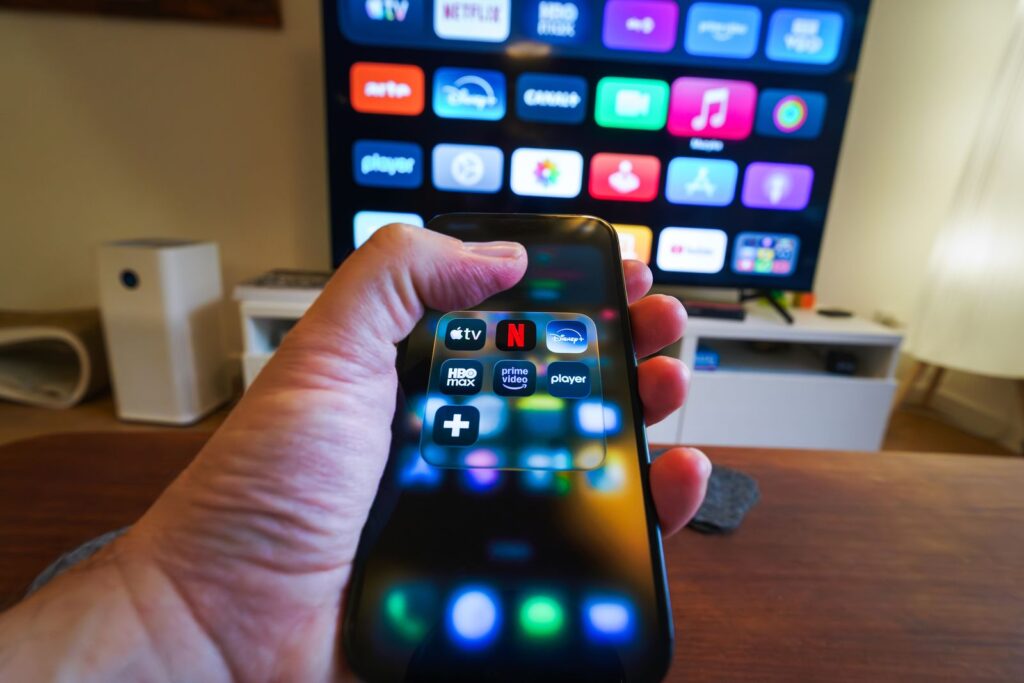
The Digital Markets, Competition and Consumers Act 2024 was supposed to end the subscription trap: a cooling-off period when a free trial rolls into a paid plan, renewal reminders, and a duty to let you cancel online if you signed up online. None of it is in force. No commencement instrument has ever appointed a day for any provision of Chapter 2 of Part 4, so none of its duties binds a trader; the start date has already slipped from “Spring 2026, at the earliest”, and the government’s most recent position, on 2 April 2026, is that it “anticipates” commencement in spring 2027. That is an expectation, not a date. Meanwhile UK consumers are estimated to spend £1.6 billion a year on subscriptions they do not want.
What follows separates what is law now from what is merely expected, then sets out the rights that actually work today.
The new subscription rules are not in force
Start with the primary source. On legislation.gov.uk Chapter 2 of Part 4 of the Digital Markets, Competition and Consumers Act 2024 — the subscription contracts chapter, sections 253 to 281 — is marked prospective. Every operative duty carries the note “not in force at Royal Assent, see s. 339(1)”: the definition in section 254, the pre-contract information duty in section 257, the reminder timing in section 259, the easy-exit duty in section 260 and the cooling-off right in section 264. One technical exception is sometimes misread as commencement. Sections 255, 256, 258, 267 and 277 are shown as “in force at Royal Assent for specified purposes, see s. 339(2)(c)” — a subsection that switches the Act on only so far as it confers power to make regulations. It lets the department draft the secondary legislation; it imposes nothing on anyone.
Other parts of the same Act have been switched on, which is where the confusion comes from. Three commencement instruments have been made under section 339. The Commencement No. 1 Regulations 2024 commenced Parts 1 and 2 (digital markets, competition) on 1 January 2025. The Commencement No. 2 Regulations 2025 commenced Part 3 and Chapter 1 of Part 4 (protection from unfair trading — the unfair commercial practices rules) on 6 April 2025, and Chapter 3 (consumer savings schemes) on 1 January 2026. The Commencement No. 3 Regulations 2026 commenced Chapter 4 (alternative dispute resolution) on 6 April 2026. Chapter 2 appears in none of the three.
A start date that keeps moving
The published trail:
- 9 September 2024. The implementation plan, in a written ministerial statement, put subscriptions last in the queue: “not commencing before Spring 2026, at the earliest”.
- 18 November 2024. The Department for Business and Trade issued its implementation consultation.
- 2 April 2026. The government response was published, after the original “Spring 2026” window had passed. It says: “We will legislate when parliamentary time allows and we anticipate that the regime will commence in spring 2027.”
- 17 April 2026. The Competition and Markets Authority told businesses in its direct consumer enforcement review that the rules are “expected to come into force in Spring 2027 with guidance from DBT”.
Neither spring-2027 statement is a commencement date. “Anticipate” and “expected” are not the language of a fixed timetable, and “when parliamentary time allows” is an explicit reservation. Nor can the regime start on the Act alone: the response confirms that “secondary legislation is required to implement the new regime”, covering cooling-off periods, refunds, the charitable exemption and the content of notices. No such regulations have been made, and no commencement instrument has appointed a day for any part of Chapter 2.
So: spring 2027 is the government’s current expectation and nothing more, and it has already slipped by a year. Plan on the rights you have.
What the regime will require when it lands
The shape is settled even if the date is not. Sections 256 and 257 require key pre-contract information before sign-up. Sections 258 and 259 require reminder notices before renewal payments, and two details get lost in the reporting. First, a notice is not due before every payment: section 258 ties it to the end of each “relevant six-month period”, so a monthly plan attracts a reminder roughly twice a year, not twelve times — though a contract that began with a free or discounted period also gets one before its first renewal payment. Second, section 259 fixes no number of days: the trader states the period up front, and the only statutory test is that it be “reasonable”. Any specific number of days quoted for that window is not in the Act.
The strongest provision is section 260. It obliges a trader to let you end the contract “in a way which is straightforward, and without having to take any steps which are not reasonably necessary”, and where you signed up online the arrangements must “enable a consumer to bring the contract to an end online”, with instructions where someone trying to cancel will find them. That would be the end of the inescapable retention phone call.
Section 264 gives a right to cancel during an initial cooling-off period and any renewal cooling-off period, “in any circumstances”, with no penalty for doing so. The government response confirms the intended shape: two 14-day windows, one on entering the contract and one after a trial or a 12-month-plus contract auto-renews, with a proportionate refund on services and the existing digital-content waiver kept for the initial window. The main new carve-out confirmed is for charity memberships — contracts letting a consumer “attend performances, see collections, or visit places” connected to the charity’s purpose.
The renewal cooling-off period is the genuinely new right: no current UK law gives a fresh 14 days when a trial converts or an annual plan renews. That gap is still open.
How big the problem actually is
The November 2024 consultation carries the only official numbers: “approximately 155 million active subscriptions in non-regulated sectors in the UK, representing consumer spend of approximately £26 billion per year”. Around 5.8 per cent are unwanted, which the consultation states as 9.7 million contracts costing an estimated £1.6 billion a year. Divide one by the other and the average is about £165 — our arithmetic, not a published figure.
One caveat: 5.8 per cent of 155 million is about 9.0 million, not 9.7 million. The consultation sets them side by side without showing the arithmetic, and confines the 155 million to “non-regulated sectors” while leaving the 9.7 million unqualified. Treat all of them as order-of-magnitude estimates.
The breakdown is the useful part. Of the 9.7 million, “an estimated 3.6 million are thought to be the direct result of being rolled over from a free or discounted subscription trial period, whilst approximately 1.3 million are thought to be the result of auto-renewing subscriptions”. That leaves 4.8 million attributed to neither cause.
The 14-day right you already have — and where it stops
The Consumer Contracts (Information, Cancellation and Additional Charges) Regulations 2013 give a cancellation right on almost anything bought at a distance or off-premises. Regulation 30: for services and for digital content not on a physical medium, “the cancellation period ends at the end of 14 days after the day on which the contract is entered into”; for goods, 14 days after delivery.
The sanction for not telling you about that right is severe and under-used. Under regulation 31, if the trader never gives the cancellation information the period ends 12 months after it would otherwise have expired; if it arrives late but inside those 12 months, you get 14 days from receipt. A subscription sold with no cancellation information can in principle be cancelled for over a year.
Two limits matter more. First, digital content: regulation 37(2) removes the right once supply begins, provided the trader got your express consent to start inside the 14 days and an acknowledgement that the right would be lost. Every streaming and software checkout has a tick-box doing exactly that. Second, this is a right to leave a contract you have just entered — it does nothing for one you took out three years ago, and no current law gives a periodic escape hatch. That is what section 264 would add.
Free trials: the hardest case, and still unfixed
Trial roll-ons are the largest identified cause of unwanted subscriptions, at 3.6 million, and the case current law handles worst. You enter the contract on day one, so the 14 days usually expire before the trial does. When it converts you get no new window: the charge is not a mistake, it is the deal you agreed to.
Until the regime starts the defence is administrative, not legal: diary the end date the day you sign up, with a margin. Apple advises cancelling “at least 24 hours before the trial ends”. Cancelling straight after sign-up usually still gives you the full trial, because access runs to the end of the period already paid for.
Making the money stop — and what that does not do
Most subscriptions run on a continuous payment authority (a recurring card payment) rather than a direct debit. The Financial Conduct Authority is unambiguous on cards: “Once you’ve asked them to, your card issuer must stop the payments – even if you haven’t contacted the business.” The issuer “can’t insist that you contact the business before stopping the payment”, and anything taken afterwards is unauthorised, so “your card issuer must refund these payments and any related charges immediately”. Ask by the end of the business day before the payment is due.
Direct debits are covered instead by the Direct Debit Guarantee: advance notice of any change to the amount, date or frequency, “a full and immediate refund” where an error is made, and cancellation “at any time by simply contacting your bank or building society”. Recurring card payments are not covered by it, which is why the FCA route matters.
Now the part people get wrong: stopping the payment does not end the contract. Inside a minimum term, or if you never told the firm, you still owe the money and can be chased with late fees and a debt collector. Stop the payment after cancelling in writing, or as a backstop when a firm bills anyway. If money has gone, chargeback covers debit, credit and prepaid cards within 120 days of purchase, but it is a card-scheme agreement, not a legal right. Section 75 of the Consumer Credit Act 1974 is a legal right, but only on credit cards and only where the cash price is over £100 and no more than £30,000 — which rules out most subscriptions.
| Right or route | Time limit | Applies to | Where it comes from |
|---|---|---|---|
| Cancel a distance or off-premises contract | 14 days from the day the contract is entered into (goods: from delivery) | Almost anything bought online, by phone or at your door | Consumer Contracts Regulations 2013, reg 30 |
| Extended cancellation, no information given | Up to 12 months on top, or 14 days from when the information arrives | Same, where the trader never told you about the right | Consumer Contracts Regulations 2013, reg 31 |
| Stop a recurring card payment | By the end of the business day before the payment is due | Continuous payment authorities on debit and credit cards | FCA, recurring card payments |
| Cancel a direct debit | Any time, before the payment leaves | Direct debits only | Direct Debit Guarantee |
| Chargeback | Within 120 days of the purchase | Debit, credit and prepaid cards; scheme rules, not law | MoneyHelper |
| Section 75 claim | No fixed window; cash price over £100 and no more than £30,000 | Credit cards only | Consumer Credit Act 1974, s 75 |
| End-of-contract notification | Between 10 and 40 days before the contract ends | Phone, broadband and pay-TV customers | Ofcom general conditions |
App-store subscriptions are cancelled with the store
Subscribe inside an iPhone or Android app and the merchant usually cannot cancel for you, and your bank cannot see the individual subscription: the mandate belongs to Apple or Google, and one statement line may cover six apps. You cancel with the store.
On iOS that is Settings, your name, then Subscriptions, or Apple’s account page on the web. On Android, Google Play says to open subscriptions, select it and tap Cancel subscription. Google gives the warning that costs people most: “When you uninstall the app, your subscription won’t cancel.” Nor does deleting your account with the merchant.
Not sure what you are actually paying for each month?
Most people find two or three they had forgotten. Divide the government’s own figures and the average unwanted subscription works out at roughly £165 a year.
Explore GetSmartSaver →The audit: twenty minutes, once a year
There is no register of your subscriptions. The only reliable method is a statement sweep across every payment rail — one always hides in the last place you check.
- Thirteen months of current account statements — thirteen, not twelve, so annual renewals cannot hide in the gap. Check direct debits and card payments separately.
- Every credit card statement, including cards you no longer use — dormant cards are where old subscriptions survive longest.
- The app store lists — iPhone: Settings, your name, Subscriptions. Android: Google Play, Payments and subscriptions.
- PayPal automatic payments, under Settings then Payments — invisible on a bank statement as anything but “PayPal”.
- Search your email for “your subscription” and “renews on” — trial confirmations are the most useful hits.
Write the annual figure next to each one, not the monthly: a £9.99 habit is £119.88 a year, which is a different conversation. Our budget planner sets the total against everything else going out; if phone and broadband are the big lines, our guide to cutting your mobile bill covers those.
What is already illegal, and who enforces it
The subscription chapter is dormant; Chapter 1 of the same Part is not. The unfair commercial practices regime came into force on 6 April 2025 and bites on how subscriptions are sold and how hard they are to leave.
The CMA’s unfair commercial practices guidance (CMA207), published on 4 April 2025 and last updated on 18 November 2025, treats deliberate exit friction as a potential aggressive practice. One listed factor is “whether the practice requires a consumer to take onerous or disproportionate action in order to exercise rights”, with a worked example of an online retailer that “builds a contract termination process that requires customers to click multiple times to confirm their decision to terminate and enter additional details about their reasons for termination”. Hiding a minimum term can also be a misleading omission.
The teeth are real. Since April 2025 the CMA can fine businesses directly, without going to court, up to 10 per cent of global turnover. In its first year it imposed £4.7 million of fines and ordered £760,000 refunded, including £4.2 million on the AA over drip pricing at its driving schools. That is enforcement against firms, not a route for individual complaints.
When a firm ignores your cancellation
Cancel in a way that leaves evidence: email or the firm’s web form, not a phone call. If it must be a call, note the date, time and name and follow up in writing, giving the account reference and the end date and asking for written confirmation.
If billing continues, exhaust the firm’s complaints process, then go outside it: in England and Wales the Citizens Advice consumer service on 0808 223 1133, which refers matters to Trading Standards; in Scotland, Advice Direct Scotland on 0808 164 6000; in Northern Ireland, Consumerline on 0300 123 6262. If the dispute is with your bank — it refused to stop a payment, or would not refund one taken after cancellation — that is a financial services complaint, and after eight weeks or a final response the Financial Ombudsman Service will look at it free.
The DMCC Act 2024 extends to England and Wales, Scotland and Northern Ireland, and the Consumer Contracts Regulations 2013 apply UK-wide, so the rights here are identical wherever you live. Only the complaints route differs.
Broadband, mobile and pay TV are a special case
Communications subscriptions have had something close to the DMCC reminder notice since February 2020. Ofcom requires providers to warn phone, broadband and pay-TV customers “between 10 and 40 days before their contract comes to an end”, stating “what you’ve been paying until now, and what you’ll pay when your contract is up”, any notice period, and the best deals “including any prices only available to new customers”. Out-of-contract customers must be reminded annually.
Act on them: the out-of-contract price is almost always the worst a provider offers. Read them alongside the changes to mid-contract broadband price rises and the position on mid-contract mobile price rises, which govern what a provider can charge mid-term.

Frequently asked questions
Are the new UK subscription rules in force yet?
No. Every duty in Chapter 2 of Part 4 of the Digital Markets, Competition and Consumers Act 2024 is still marked prospective on legislation.gov.uk; only the powers to make the implementing regulations came into force at Royal Assent. Three commencement instruments have been made under the Act, bringing in digital markets, competition, unfair trading, consumer savings schemes and dispute resolution. None of them commences the subscription chapter.
When will the DMCC subscription rules start?
No date is settled. The government response of 2 April 2026 says it will legislate when parliamentary time allows and anticipates commencement in spring 2027, and the CMA repeated that on 17 April 2026. The 2024 plan was spring 2026 at the earliest, so it has slipped by about a year.
Can I cancel any subscription within 14 days?
Only a new one. The Consumer Contracts Regulations 2013 give 14 days from the day you enter a distance contract, not a rolling right to leave later. For digital content you usually lose even that once supply starts, because you agreed to immediate access. If the trader never told you about the right, the period can extend by up to 12 months.
Can my bank stop a subscription payment if the company will not?
Yes. The FCA says your card issuer must stop a recurring card payment once you ask, even if you have not contacted the business, and cannot insist you do so first. Ask by the end of the business day before the payment is due. Payments taken afterwards are unauthorised and must be refunded immediately, with any charges.
Does stopping the payment cancel the contract?
No, and this is the most expensive misunderstanding here. Blocking a payment stops the money leaving; it does not end your legal obligation. If you are in a minimum term or never told the firm, the debt keeps building and can be passed to a collection agency. Cancel in writing first, then stop the payment as a backstop.
How do I cancel a subscription bought inside an app?
Through the app store, not the app. On iPhone use Settings, your name, then Subscriptions, or Apple’s account page on the web. On Android use Google Play, then subscriptions, then Cancel subscription. Google warns that uninstalling the app does not cancel it. Cancelling leaves your access running to the end of the period already paid for.
Last reviewed: September 2026. The commencement position for the subscription regime is as recorded on legislation.gov.uk and in GOV.UK publications on 4 September 2026, and may change. This article is general information, not personal financial advice — check your own position with gov.uk or the relevant body, or get free help from MoneyHelper or Citizens Advice, before acting on it.