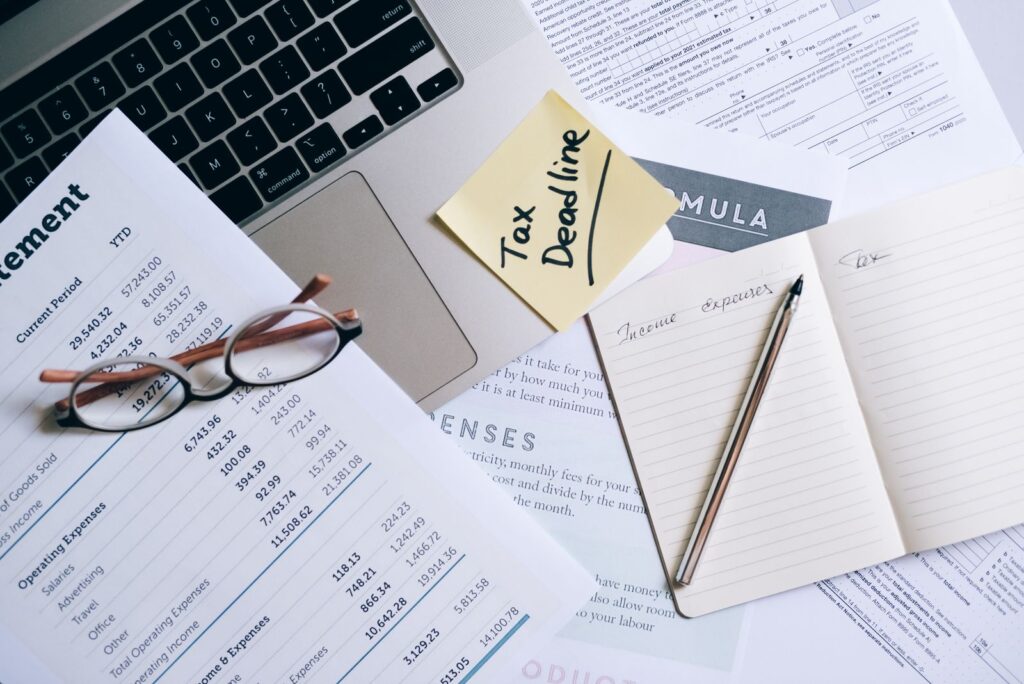
If you are filing a paper Self Assessment return for 2025/26, it must reach HMRC by 11:59pm on Saturday 31 October 2026 — 12 days from today. File online and you have until Sunday 31 January 2027, which is also the day the tax is due. In between sits a third date most people miss: file online by Wednesday 30 December 2026 and, if you owe less than £3,000 and already pay tax through PAYE, HMRC can collect it through your tax code instead of as a lump sum. Miss 31 January and the penalty is a fixed £100 straight away, whatever you owe.
This guide covers the 2025/26 tax year, 6 April 2025 to 5 April 2026: every deadline, who must file, what to do if you missed registration, the penalty and interest ladder, January and July payments, appeals, records and common mistakes. Self Assessment is UK-wide; the Scottish difference is near the end.
The 2025/26 deadlines, in date order
HMRC’s deadlines page is clear: paper returns by 31 October 2026, online returns and payment by 31 January 2027. Register late and HMRC gives you three months from its letter or email to file — but the tax is still due by 31 January 2027.
Free download
The UK Savings Pot Tracker spreadsheet
Track every pot, rate and goal in one place. Enter your email and it is yours instantly, plus an occasional email when a money change affects you. Unsubscribe any time.
Both dates fall at weekends. 31 October 2026 is a Saturday, so post a paper return well before then: it must arrive, not just be sent. 31 January 2027 is a Sunday: HMRC says payments should reach it by the last working day before — Friday 29 January — unless you use Faster Payments or a card, which work on the day. A first-time Direct Debit takes five working days.
| Date | What happens | Who it affects |
|---|---|---|
| Mon 5 October 2026 (passed) | Deadline to tell HMRC you need to file for 2025/26 | New filers, and anyone who did not file for 2024/25 |
| Sat 31 October 2026, 11:59pm | Paper return must reach HMRC | Paper filers |
| Wed 30 December 2026, 11:59pm | Online return deadline to have tax collected through your tax code | PAYE taxpayers owing under £3,000 |
| Sun 31 January 2027, 11:59pm | Online return due; pay the 2025/26 balance and the first 2026/27 payment on account | Everyone filing online |
| 1 day late | £100 late filing penalty | Return not filed |
| 30 days late | 5% of tax still unpaid | Tax not paid |
| 3 months late (from 1 May 2027) | £10 a day for up to 90 days, maximum £900 | Return not filed |
| 6 months late | Further 5% of tax due or £300, whichever is greater; plus 5% of tax still unpaid | Return not filed; tax not paid |
| Sat 31 July 2027 | Second payment on account for 2026/27 | Anyone making payments on account |
| 12 months late | Another 5% or £300; plus another 5% of tax still unpaid | Return not filed; tax not paid |
| Mon 31 January 2028 | Last day to amend a 2025/26 return | Anyone who filed and spots a mistake |
The 30 December option, and its conditions
Paying through your tax code spreads a small bill across your pay. HMRC’s conditions: you owe less than £3,000, already pay tax through PAYE, and filed online by 30 December (or on paper by 31 October). A part payment to get under £3,000 does not count. It is refused if you lack enough PAYE income, if it would take more than 50% of that income, or if you would pay more than twice your normal tax. For a small side-income bill, this is the cheapest deadline to aim for.
Who has to file a 2025/26 return
GOV.UK’s list of who must send a return says you must file if, in 2025/26, any of these applied: you were self-employed as a sole trader and earned more than £1,000 before expenses; you were a partner in a business partnership; you had to pay Capital Gains Tax; you had to pay the High Income Child Benefit Charge and do not pay it through PAYE; or you are an off-payroll worker repaying a student or postgraduate loan. Other reasons include rental income, tips, savings interest, dividends and foreign income.
- Property. The first £1,000 of rental income is covered by the property allowance. HMRC’s renting guidance says to contact it if your rental income is more than £1,000 and up to £2,500, and to file a return if it is more than £2,500 after allowable expenses or more than £10,000 before them.
- High Income Child Benefit Charge. It starts at £60,000 of income: 1% of the Child Benefit for every £200 over, all of it at £80,000. You can now pay through PAYE instead, unless you file for another reason or pay after 31 January 2027.
- Savings interest. HMRC usually collects tax on interest through your tax code. If your bank or building society reports more than £10,000 of interest, HMRC will send you a notice to file a return.
- Capital gains. The annual exempt amount was £3,000 for 2025/26. Gains above it must be reported.
One criterion has gone. HMRC used to require a return from PAYE-only earners above a set income — £100,000, then £150,000 for 2023/24. HMRC removed that test from 2024/25 onwards, and GOV.UK’s criteria for 2025/26 contain no such test, so a high salary alone no longer puts you in Self Assessment. Many high earners still file to claim pension relief or because of the Child Benefit charge. If HMRC has sent you a notice to file, you must file, or ask HMRC to withdraw it.
If you earn from selling online, freelancing or a weekend business, our side hustle tax rules guide covers where hobby ends and trading starts.
Missed the 5 October registration deadline?
Register now. GOV.UK says you could get a penalty if you tell HMRC after 5 October 2026, but its deadlines page adds that if you register late you must still pay by 31 January 2027 to avoid a penalty. So register this week, estimate what you owe, and pay it by 31 January 2027 even if the return comes later.
Getting your UTR and sign-in sorted: allow two to three weeks
Everything hangs off your Unique Taxpayer Reference (UTR). HMRC’s registration service says that if you register online and are not self-employed, the UTR appears in your personal tax account within 72 hours. By post it usually takes 15 working days, or 21 days if you are abroad, and longer at busy times. Register as self-employed and HMRC posts an activation code for the new online account, usually within 7 working days, or 21 if you are abroad.
Fifteen working days from today lands in early November: fine for 31 January, too late for paper. If you have filed before, your UTR is in your personal tax account and the HMRC app.
The penalty ladder for a late return
HMRC’s penalty rules for a late 2025/26 return are fixed amounts first, then percentages. One day late: £100. After three months: £10 a day for up to 90 days, a maximum of £900. After six months: a further 5% of the tax due or £300, whichever is greater. After twelve months: another 5% or £300. The £100 is fixed, which is why people with small bills still get caught.
Late payment is separate: 5% of the unpaid tax at 30 days, six months and twelve months. That is the regime for an ordinary 2025/26 return. The higher rates in HMRC’s penalty reform policy paper — 3% at 15 days, 3% at 30 days and 10% a year from day 31 — took effect for VAT from 1 April 2025, and the paper says they also apply to Making Tax Digital for Income Tax. They do not replace the 5% steps on an ordinary 2025/26 return.
Take someone with £2,000 of tax who neither files nor pays. After a year the late filing penalties reach £1,600 (£100, plus £900 of daily penalties, plus two £300 minimums, because 5% of £2,000 is only £100). The late payment penalties add £300 (three lots of £100). That is £1,900 of penalties on a £2,000 bill, before interest.
Late payment interest: 7.75% today
Interest runs on anything paid late, including payments on account. HMRC’s published rates show 7.75% from 9 January 2026. Since 6 April 2025 it has been base rate plus 4 percentage points, up from plus 2.5. Bank Rate is 3.75%, so 7.75%. It moves with Bank Rate.
On the £2,000 example, a year of interest at 7.75% adds £155.
Paying: January, July and the payments on account
The 31 January 2027 payment can be two things: the 2025/26 balance plus the first payment on account towards 2026/27. HMRC’s payments on account rules say each payment is usually half of the previous year’s bill, due on 31 January and 31 July. They do not apply if last year’s bill was under £1,000, or more than 80% of your tax was taken at source.
This is what catches first-year filers. Take a 2025/26 bill of £4,000 for someone who has never made payments on account. On 31 January 2027 they pay the £4,000 plus a £2,000 first payment on account for 2026/27 — £6,000. On 31 July 2027 they pay another £2,000. That is £8,000 in six months on a £4,000 bill. The same person a year on, who paid £1,500 twice towards 2025/26 because their 2024/25 bill was £3,000, pays a £1,000 balance plus £2,000 on account in January — £3,000 — then £2,000 in July. Our guide to payments on account goes through the mechanics.
If your 2026/27 income has fallen, ask HMRC to reduce them, online or on form SA303. Reduce too far and you pay interest on the shortfall. For the PAYE side of a change in income, our take-home pay calculator helps.
If you cannot pay in full
Before the bill is due, a Budget Payment Plan lets you pay weekly or monthly by Direct Debit, if you are up to date with your last bill. After filing, Time to Pay can spread what you owe: HMRC’s December 2025 announcement said bills up to £30,000 can be set up online once the return is filed, and 17,955 were set up online between 6 April and 30 November 2025. Above that, phone HMRC. Interest still runs.
File early, pay on time — they are not the same deadline.
Filing in November costs nothing extra and tells you the bill while there are still weeks to find the money. The tax is not taken until 31 January.
Explore GetSmartSaver →Reasonable excuse and appeals
HMRC’s reasonable excuse guidance accepts things like a close relative dying shortly before the deadline or an unexpected hospital stay — not finding the online system difficult or not getting a reminder. You must file or pay as soon as you can afterwards. You usually have 30 days from the penalty date to appeal.
What to have ready before you start
Gather these for 2025/26:
- P60 from each employer you worked for on 5 April 2026 (issued by 31 May), and a P45 from any job you left.
- P11D details of benefits such as a company car, reported by employers by 6 July.
- Interest on every non-ISA account.
- Dividends outside an ISA or pension; the 2025/26 allowance was £500.
- Pension contributions to relief-at-source schemes: higher-rate taxpayers claim a further 20% relief, additional-rate 25%.
- Gift Aid donations, so higher-rate taxpayers can claim the difference.
- Child Benefit received, if the charge applies.
- Self-employment and property figures, and any disposals of shares, crypto or property.
- Student loan plan type.
The self-employed also pay Class 4 National Insurance through the return: for 2025/26, 6% on profits between £12,570 and £50,270 and 2% above. Class 2 is no longer charged: with profits of £6,845 (the small profits threshold) or more you are treated as having paid it, and below that you can pay it voluntarily at £3.50 a week to protect your State Pension record.
Make next January easier
These are for keeping your 2026/27 records as you go — for the return due by 31 January 2028 — not for filing the 2025/26 one in front of you now.
Sole Trader Bookkeeping Spreadsheet — £9.99 UK Self Assessment Guide 2026/27 (£6.99)The mistakes we see most often
Claiming the trading allowance and expenses together
You can deduct the £1,000 trading allowance or your actual expenses, not both. On £3,000 of income with £400 of costs, the allowance leaves £2,000 taxable and expenses leave £2,600, so take the allowance. With £1,400 of costs, expenses win: £1,600 against £2,000.
Using this year’s mileage rate on last year’s return
HMRC’s simplified expenses rates for cars and goods vehicles rose from 45p to 55p a mile for the first 10,000 business miles from 6 April 2026. The 2025/26 return is still 45p, then 25p a mile after 10,000. Claim 4,000 business miles at 55p and you would claim £2,200 instead of the correct £1,800 — £400 too much.
Forgetting interest over the Personal Savings Allowance
Basic-rate taxpayers get £1,000 of interest tax-free, higher-rate taxpayers £500, and additional-rate taxpayers nothing. With £1,300 of interest, a basic-rate taxpayer owes 20% on £300, which is £60; a higher-rate taxpayer owes 40% on £800, which is £320. If you file, put the interest on the return.
Ignoring the student loan box
The return collects student loan repayments on income your employer did not see. For 2025/26 the annual thresholds were £26,065 for Plan 1, £28,470 for Plan 2, £32,745 for Plan 4 and £21,000 for a Postgraduate Loan. Plans 1, 2 and 4 take 9% above the threshold, the Postgraduate Loan 6%. Tick the right plan.
HMRC scams peak in January
HMRC said in December 2025 that more than 4,800 Self Assessment scams had been reported to it since February 2025, among over 135,500 reports of suspected HMRC-related scams in ten months. HMRC says it will never contact you by email, text or phone to tell you about a refund or ask you to claim one. Forward suspicious emails to phishing@hmrc.gov.uk and texts to 60599, do not trust caller ID, and if you have lost money, call your bank. To check what you owe, type gov.uk into your browser and sign in yourself.
Where Making Tax Digital fits
Making Tax Digital for Income Tax started on 6 April 2026 for sole traders and landlords with qualifying income over £50,000 on their 2024/25 return. HMRC’s eligibility guidance says you still submit a normal Self Assessment return for the tax year before you start, so April joiners still file 2025/26 by 31 January 2027.
This return also decides the next wave: HMRC uses 2025/26 figures to bring in sole traders and landlords with qualifying income over £30,000 from 6 April 2027, then 2026/27 figures for £20,000 from April 2028. Qualifying income is your total self-employment and property income before expenses; wages, pensions and dividends do not count. Our Making Tax Digital guide covers what changes and how to prepare.
Scotland: one return, different rates
The return and deadlines are UK-wide, but Scottish taxpayers pay Scottish rates on earnings, pensions and most other income. For 2025/26 GOV.UK lists a 19% starter rate on £12,571 to £15,397, 20% basic to £27,491, 21% intermediate to £43,662, 42% higher to £75,000, 45% advanced to £125,140 and 48% above. Savings interest and dividends are taxed at the UK rates. A starter-rate taxpayer still gets 20% pension relief added by the provider. Wales and Northern Ireland used the same rates as England for 2025/26.
If you do one thing this week
An estimated one million people missed last year’s deadline; of 11,489,825 returns received by 31 January 2026, 475,722 came on the final day. Filing now costs nothing and gives you the number while there is time to find the money. Registered? Start the return tonight. Not registered? Do that today.

Frequently asked questions
When is the Self Assessment deadline for 2025/26?
Paper returns must reach HMRC by 11:59pm on 31 October 2026. Online returns are due by 11:59pm on 31 January 2027, when the tax is also due. To have a bill under £3,000 collected through your tax code, file online by 30 December 2026. 31 January 2027 is a Sunday, so use Faster Payments or a card, or pay by Friday 29 January.
What is the penalty for filing my tax return late?
A fixed £100 if the return is one day late. After three months, £10 a day for up to 90 days, a maximum of £900. After six months, a further 5% of the tax due or £300, whichever is greater, and the same again after twelve months. Late payment adds 5% of unpaid tax at 30 days, six months and twelve months, plus interest.
What is HMRC’s late payment interest rate now?
7.75% a year from 9 January 2026. Since 6 April 2025 it has been set at the Bank of England base rate plus 4 percentage points; before that it was base rate plus 2.5. With Bank Rate at 3.75%, that gives 7.75%. It changes when Bank Rate changes, so check HMRC’s published rates when you pay.
I missed the 5 October deadline to register. What now?
Register straight away. GOV.UK says registering after 5 October could bring a penalty. HMRC will give you three months from its letter or email to file, but you must still pay by 31 January 2027 to avoid a penalty, so estimate what you owe and pay on time.
How long does it take to get a UTR?
If you register online and are not self-employed, HMRC says your UTR appears in your personal tax account within 72 hours. By post it usually takes 15 working days, or 21 days if you are abroad, and longer at busy times. If you register as self-employed, the activation code for your online account usually arrives within 7 working days, or 21 if you are abroad.
Do I still file a 2025/26 return if I joined Making Tax Digital in April 2026?
Yes. HMRC says you still submit a normal Self Assessment return for the tax year before you start Making Tax Digital, so April 2026 joiners file 2025/26 by 31 January 2027 as usual. Your 2025/26 figures also matter: qualifying income over £30,000 brings you into Making Tax Digital from 6 April 2027.
Last reviewed: October 2026. Figures are current at 19 October 2026, from GOV.UK, HMRC and the Bank of England. Interest moves with Bank Rate, so check GOV.UK before you pay. Self Assessment, its deadlines and its penalties apply across the UK; Scottish taxpayers pay Scottish income tax rates on non-savings, non-dividend income, while Wales and Northern Ireland used the same rates as England for 2025/26. Worked examples are our own calculations on the stated assumptions. This article is general information, not personal financial advice — check your own position with gov.uk or HMRC, or get free help from MoneyHelper or Citizens Advice, before acting on it.