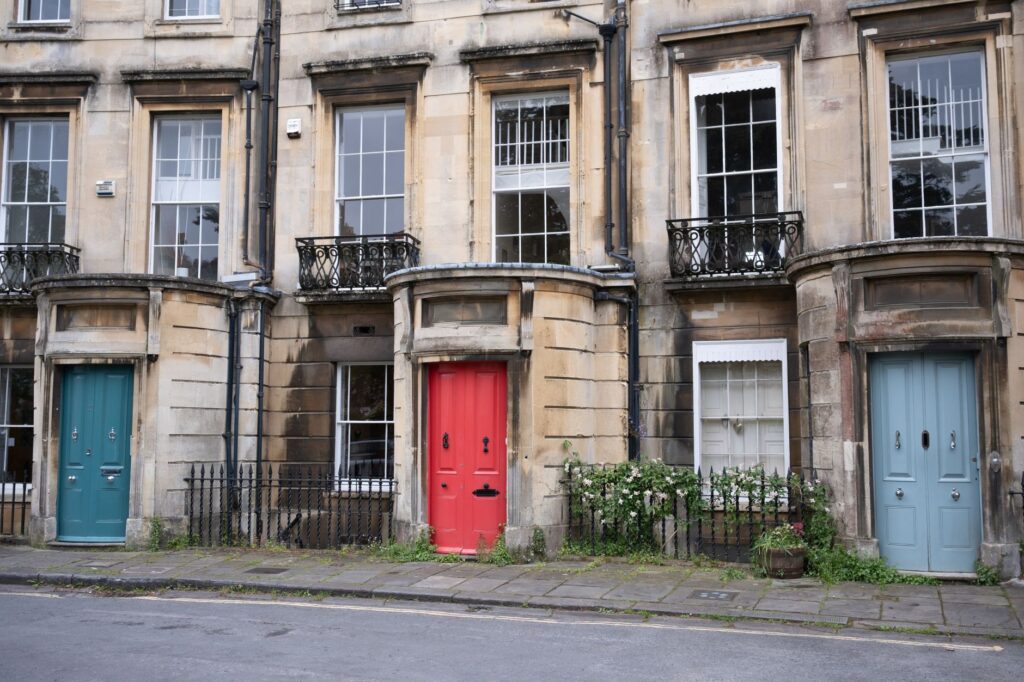
Council tax bands in England and Scotland still reflect what a home was worth on 1 April 1991, and in Wales on 1 April 2003 — and most homes were banded from a desk, not a doorstep. Checking is free. On the most recent Valuation Office figures, covering 2023–24, 27 per cent of the 39,590 resolved challenges produced a lower band and fewer than 1 per cent a higher one. With England’s average Band D bill at £2,392 for 2026–27, one band down is worth about £266 a year, and an over-banding can be refunded back to 1 April 1993.
This guide covers the free two-part check, the difference between a formal proposal and an informal band review, how to submit in each UK nation, the evidence that works, and the real risk that your band goes up instead of down.
Why so many homes sit in the wrong band
The first valuation list for England and Wales was published in March 1993 using values as at 1 April 1991. The Valuation Office’s own Council Tax Manual is candid about the method: it used records already held so that most dwellings could be “banded at the desk”, with key properties valued properly and the rest slotted in by comparison.
That is the reality behind the folklore about valuers driving past in second gear. Some homes were assessed from the street; many were never looked at. Anything unusual — extended, sub-divided, or simply mis-recorded — could land a band out.
Nothing has systematically corrected those errors. Bands in England and Scotland still rest on those 1991 values. Wales revalued once, producing a new list on 1 April 2005 using 2003 values and adding a ninth band, Band I.
What one band is actually worth in cash
Bands are not priced individually by councils. Parliament fixed the ratios in the Local Government Finance Act 1992: bands A to H are charged in the proportions 6:7:8:9:11:13:15:18, with Band D the reference point of 9. Wales adds Band I at 21.
So one band step below Band D is worth exactly one ninth of the Band D charge. The average Band D bill set by English councils for 2026–27 is £2,392, up £111 or 4.9 per cent on the year, with the average per dwelling at £1,868. On that average, one band down saves roughly £266 a year for as long as you stay.
| Band | Ratio | Illustrative bill | Saving vs one band up |
|---|---|---|---|
| A | 6/9 | £1,595 | £265 |
| B | 7/9 | £1,860 | £266 |
| C | 8/9 | £2,126 | £266 |
| D | 9/9 | £2,392 | £532 |
| E | 11/9 | £2,924 | £531 |
| F | 13/9 | £3,455 | £532 |
| G | 15/9 | £3,987 | £797 |
| H | 18/9 | £4,784 | — |
The free two-part check to run first
A strong case answers two questions. Doing only the first is how people end up rejected, or re-banded upwards.
Compare yourself with genuinely identical neighbours
Every band in England and Wales is public. Use the free band search on GOV.UK, then work along your street checking homes of the same age, type, size and layout; Scotland has the same free search on the Scottish Assessors Association site. Several identical properties a band below you is the start of a case. Be strict about “identical”, though: the same front door can hide a different loft conversion, plot or build date, so mixed bands on one street are often correct.
Sanity-check what your home was worth in 1991
Take a price your home actually sold for and index it back to 1 April 1991 (England and Scotland) or 1 April 2003 (Wales) using a regional house price index, then see which band that value falls into. If it sits comfortably in a lower band, your neighbour evidence is corroborated. If not, stop.
One caveat: this is a check for you, not evidence for them. The Valuation Office says to avoid house price calculator data in a challenge, because it is broad and not location-specific.
| Band | England (1 Apr 1991) | Scotland (1 Apr 1991) | Wales (1 Apr 2003) |
|---|---|---|---|
| A | Up to £40,000 | Up to £27,000 | Up to £44,000 |
| B | £40,001–£52,000 | £27,001–£35,000 | £44,001–£65,000 |
| C | £52,001–£68,000 | £35,001–£45,000 | £65,001–£91,000 |
| D | £68,001–£88,000 | £45,001–£58,000 | £91,001–£123,000 |
| E | £88,001–£120,000 | £58,001–£80,000 | £123,001–£162,000 |
| F | £120,001–£160,000 | £80,001–£106,000 | £162,001–£223,000 |
| G | £160,001–£320,000 | £106,001–£212,000 | £223,001–£324,000 |
| H | Over £320,000 | Over £212,000 | £324,001–£424,000 |
| I | — | — | Over £424,000 |
- Look up your own band on the official register.
- List neighbours of the same age, type, size and layout, with their bands.
- Note up to five that sit a band lower, with full addresses.
- Index a real sale price back to the relevant valuation date.
- Photograph anything that lowers your value — smaller plot, no garage, shared access.
- Check separately for missed discounts and disregards.
Proposal or band review: the difference that decides your rights
The GOV.UK guide to challenging your council tax band splits challenges into two very different things, and most people do not realise which they are making.
A proposal is a formal challenge you have a legal right to make: if you have paid council tax on the property for under six months, if the Valuation Office changed your band in the last six months, if the property has been split, merged or partly turned over to business use, if your local area has physically changed, if the property should be deleted as demolished, derelict or under major renovation, or if it has no band. A proposal must be reviewed and carries a right of appeal.
A band review is what everyone else gets: an informal request the Valuation Office need not accept. It decides within days whether to take the case, and only on strong evidence supplied up front. If a band review is refused there is no appeal — that right attaches only to a proposal. Which is why the six months after you move in matter.
How to submit in each UK nation
England and Wales
Challenges go to the Valuation Office. The simplest route is the online challenge service reached from the GOV.UK band search, which works whether or not you have a legal right. Email and postal routes use the council tax challenge form, and an agent must file an authority to act form on paper. Keep paying your bill — a challenge does not suspend liability.
Scotland
Scotland is run by regional assessors. Search your property on the Scottish Assessors Association site and use its “make a proposal” route. You can propose within six months of becoming owner or liable person, within six months of a banding notice, or within six months of a tribunal decision on a comparable property. Proposals based on a material reduction in value, such as structural damage or disability adaptations, can be made at any time. The assessor must acknowledge within 14 days.
Northern Ireland
Northern Ireland has no bands. Domestic rates are the rateable capital value multiplied by the combined regional and district rate, using capital values assessed at 1 January 2005 and capped at £400,000. Disputes go to Land & Property Services.
What evidence actually wins
The Valuation Office has published what it looks for. Its guidance on evidence to support a band challenge asks for up to five comparable properties, defined tightly: same street or estate in a town, or within about ten miles rurally; same style and type, so houses against houses and semis against semis; built in the same period; and generally within about 10 per cent on size, with floor area mattering far more than bedroom count.
The alternative is sale prices from the right window — in England, sales between 1 April 1989 and 31 March 1993; in Wales, between 1 April 2001 and 31 March 2005. Prices outside those windows carry no weight.
Two arguments routinely sink challenges: that the bill is unaffordable, and comparing yourself with a home since improved. An enlargement does not change a band immediately; it may push that band up when the property is next sold. If your case is deterioration or a change in the area, photographs and repair quotes count.
The honest risk: your band can go up, and so can your neighbours’
There are three outcomes, not two: down, unchanged, or up. The Valuation Office also says it may review similar neighbouring properties when it looks at yours, and those bands can move either way. A challenge is not a private matter between you and the tax office.
| Outcome of resolved challenges | Share, 2023–24 |
|---|---|
| No change to the band | 65% |
| Band reduced | 27% |
| Property deleted from the list | 5% |
| Band increased | Less than 1% |
One piece of law softens the risk. Under the rules governing when an alteration to the valuation list takes effect, correcting an original-list error that had you in a band lower than it should have been takes effect only from the day the alteration is entered. An increase is not backdated, so you face no bill for past years. Still, if your own check shows you are already lower than identical neighbours, a challenge invites exactly the review you do not want.
Council tax is often the second biggest bill in the house
Our UK money guides cover the discounts, exemptions and support most households never claim.
Explore GetSmartSaver →Refunds, timescales and what happens if you are refused
GOV.UK gives a working timetable. Acknowledgement usually arrives within days but can take up to 28. A proposal can take up to four months to decide; a band review up to 12 months, because proposals are handled first.
If your band comes down, the Valuation Office tells your council, which reissues the bill and refunds the overpayment. Backdating is generous: where the alteration corrects an inaccuracy present on the day the list was compiled, and the band was too high, it takes effect from that compilation date — 1 April 1993 in England, 1 April 2005 in Wales, with Scotland working on the same principle. In practice you recover the tax you paid while liable at the wrong band.
If you are refused and you had a legal right to challenge, the appeal is free. England allows three months from the decision to appeal to the Valuation Tribunal for England; Wales allows four months to the Valuation Tribunal for Wales. Hearings are remote, no costs are awarded, and a decision follows within a month, the whole process typically taking around nine months. Scottish appeals go to the First-tier Tribunal Local Taxation Chamber, six months and six weeks from the proposal date.
The discounts that often beat a band challenge
Before spending weeks on a band, check the reliefs. A single adult occupier gets 25 per cent off, and the same applies if everyone else in the home is “disregarded”. If every resident is disregarded, it rises to 50 per cent. The disregarded list is long: under-18s, apprentices, 18 and 19-year-olds in full-time education, students, student nurses, foreign language assistants, live-in carers, diplomats, and people who are severely mentally impaired.
That last category is the most missed and the most valuable, and it needs a doctor’s certificate to claim. A qualifying resident plus one other adult cuts the bill by 25 per cent. Ask explicitly for backdating to when the conditions were first met, rather than accepting the date you applied. Separately, the disabled band reduction scheme charges the bill at the next band down if a resident needs an extra room or wheelchair space, or takes 17 per cent off in Band A.
If you are going through the bills line by line anyway, our audit workbook gives it a structure.

Next steps: run the neighbour check, then read our overview of how council tax works in 2026. Work through the full list of council tax discounts and exemptions before challenging, and if money is tight check council tax reduction. To see what a lower band does to your month, use our free budget planner.
Frequently Asked Questions
Does it cost anything to challenge my council tax band?
No. Checking your band and challenging it — via the Valuation Office in England and Wales, or the assessor in Scotland — is free, and a Valuation Tribunal appeal is free too, with no costs awarded against either side. Firms offering to reclaim for a percentage do what you can do yourself.
Can my council tax band go up if I challenge it?
Yes. There are three outcomes: down, unchanged, or up. On the latest published figures, covering 2023–24, fewer than 1 per cent of resolved challenges ended in an increase, but the risk is real, and the Valuation Office may also review similar neighbouring homes. An increase is not backdated; it applies from the day the list is altered.
How far back can a council tax refund go?
Where the correction fixes an inaccuracy present from the day the list was compiled, and your band was too high, the change takes effect from that compilation date — 1 April 1993 in England, 1 April 2005 in Wales, with Scotland on the same principle. You recover the council tax you personally paid while liable at the wrong band.
How long does a council tax band challenge take?
GOV.UK says acknowledgement usually arrives within a few days, though it can take up to 28 days. A formal proposal, where you have a legal right to challenge, can take up to four months. An informal band review can take up to 12 months, because proposals are prioritised. Keep paying your bill throughout.
Can I still challenge if I have lived here for years?
You can ask, but not as of right. After six months of paying council tax on the property you lose the legal right to make a proposal, so you are requesting an informal band review. The Valuation Office decides within days whether to accept it, only on strong evidence, and a refusal cannot be appealed.
Will challenging my band affect my neighbours?
It can. The Valuation Office says it may review the bands of similar neighbouring properties when it examines yours, and those can move up as well as down. If your own check suggests you are the under-banded one on the street, a challenge is more likely to cost neighbours money than save you any.
Last reviewed: August 2026. Figures were checked against GOV.UK, legislation.gov.uk, the Scottish Assessors Association, nidirect and the Valuation Tribunal at the date of writing and can change. This is general information, not personal financial advice.